
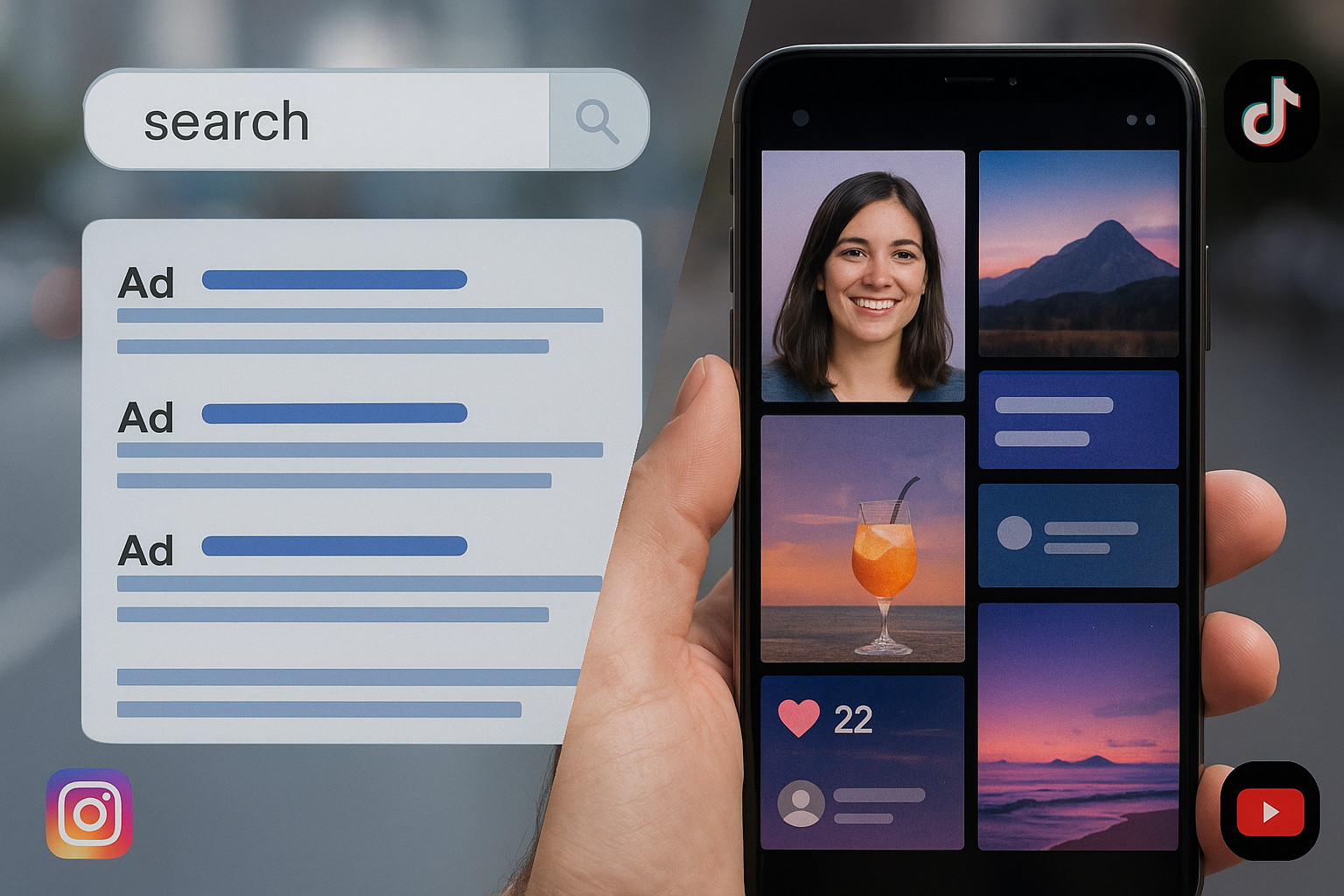

In today’s Why Social Search Matters post, we’re delving into a trend that’s significantly changing how people find information online. More and more, social media platforms like TikTok, Instagram, and YouTube are becoming the go-to places for searches, and it’s not just for fun or leisure.
Whether it’s finding a new recipe, discovering a product, or learning a new skill, people are increasingly turning to social media first.
So, why is this happening? It’s simple: people crave content that feels real, relatable, and personal. Social platforms deliver just that, often faster and in a more engaging format than traditional search engines. Therefore, let’s break down why this shift is happening and what it means for marketers.
Why Social Search Matters: The Shift from Traditional Search Engines to Social Platforms
Why Are Social Platforms Becoming Search Engines?
These days, social media platforms are no longer just for sharing updates or connecting with friends. Instead, they’ve evolved into rich content ecosystems where people actively search for advice, recommendations, and inspiration. To better understand this shift, here are a few important factors driving this change:
1. Instant, Personalized Results
First and foremost, people love the immediacy of social content. Unlike traditional search engines that can feel cluttered with links and ads, social platforms show videos, images, and posts that are instantly digestible. Furthermore, algorithms personalize these results based on your previous interactions, making it feel like the content was curated just for you.
2. Social Proof and Community Insight
If you’ve ever searched for product reviews, you know how impersonal they can feel. On social platforms, however, recommendations come from real people sharing their own experiences. Whether it’s a short video showing how a product works or a comment thread debating a new trend, it feels more genuine and relatable. As a result, people are more likely to trust and engage with this type of content.
3. Visual and Interactive Content
Social platforms thrive on visual storytelling, which makes a big difference. Instead of reading a long article, users watch a quick clip or swipe through images. Consequently, this format keeps people engaged while giving them the information they need without the extra fluff.
What This Means for Marketers
If social search is becoming more prevalent, how can marketers make the most of it? Here are a few practical tips to consider:
1. Optimize for Social Search
To start, think about how people search on social media. Instead of focusing on lengthy keywords, use short, catchy phrases. For example, rather than “best running shoes for beginners,” think “top beginner running shoes.” Additionally, hashtags, video descriptions, and captions play a big role in how your content gets discovered.
2. Create AI-Enhanced Content
Next, consider using AI tools to generate content that aligns with social algorithms. Use AI to craft engaging captions, optimize keywords, and even suggest trending topics. Moreover, AI-driven content planning can ensure your posts hit the right notes while saving you time.
3. Leverage Community Engagement
Another key strategy is to invite your followers to share their personal experiences with your product or service. User-generated content (UGC) can act as social proof, making your brand appear more authentic and relatable. In addition, this content boosts your visibility within the platform’s search function.
Potential Pitfalls and How to Avoid Them
Social search is powerful, yet it comes with challenges. For one, algorithms change frequently, and relying solely on one platform can put your reach at risk. Therefore, diversify your content across multiple social networks and keep an eye on algorithm updates to maintain visibility.
Also, be cautious of overly promotional content. People on social media are looking for value and authentic interactions, not just ads. Therefore, blend educational, entertaining, and promotional content to maintain audience interest.
Why AI is Key to Social Search Success
AI can help you keep up with ever-changing algorithms. For example, tools like AI-driven social listening and content creation platforms make it easier to adapt. Additionally, AI can help you analyze what’s working and what isn’t, allowing you to pivot quickly.
For instance, AI-generated content variations can help you A/B test captions and visuals to see what resonates best. By using AI tools to optimize content, you increase your chances of appearing in social searches without constantly reinventing your strategy.

I hope you found value in my Why Social Search Matters post. The rise of social search isn’t just a passing trend — it’s reshaping how people find information online.
Marketers who adapt to this change will be better positioned to reach their audience in meaningful ways. By creating content that feels genuine, leveraging AI for optimization, and staying flexible as algorithms evolve, you can thrive in this new search landscape.
Instead of seeing this shift as a challenge, view it as an opportunity. Social search opens new doors for creativity and connection. It’s time to meet your audience where they’re already looking — on social media.
To Your Success!


