

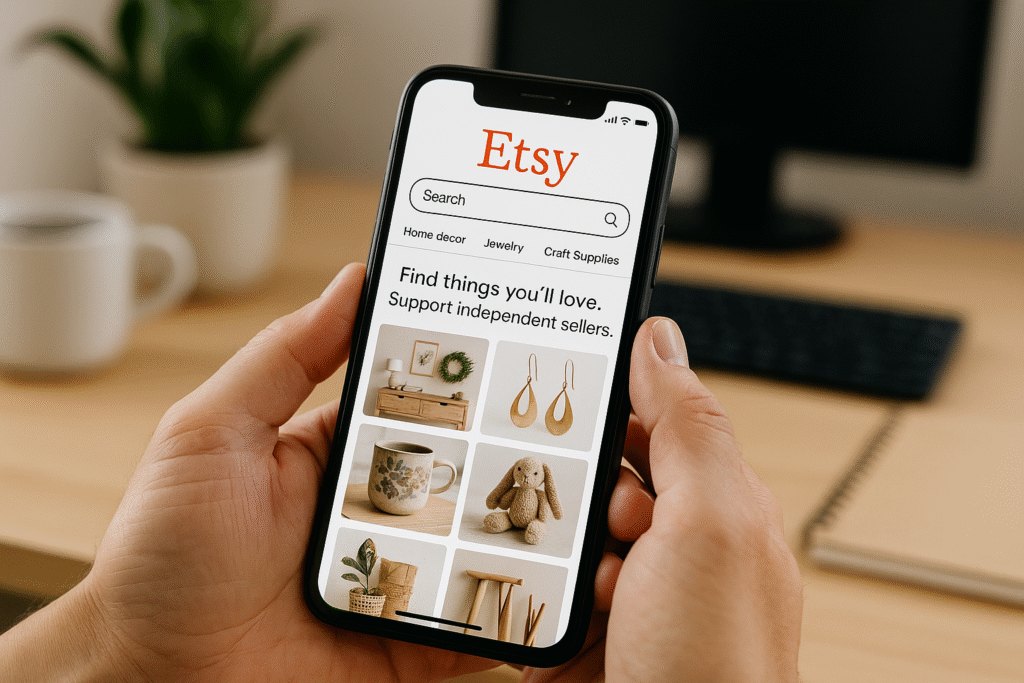
In today’s How to Sell Digital and Low-Content Products on Etsy post, we’re walking through the opportunity behind selling digital downloads – like planners, journals, and templates – and how you can turn simple ideas into repeatable income, even with a small setup.
What Exactly Are Low-Content and Digital Products?
Low-content products are things like planners, journals, workbooks, and trackers – items that provide structure or guidance but require minimal written content from you. On the other hand, digital products include anything downloadable: social media templates, eBooks, digital art prints, resume templates, etc.
What makes these products appealing is their simplicity. These files are created once and sold over and over again. That’s the appeal. There’s no physical stock to manage. Once someone places an order, Etsy handles the delivery automatically.
Why Etsy Is Still a Smart Place to Sell
Etsy already has the audience. People come to the platform looking for creative tools and ready-to-use templates. Unlike starting from scratch, you don’t have to build a website or grow an audience before making your first sale. Etsy gives you a head start by placing your product in front of motivated buyers who are already searching.
Plus, because digital products don’t expire, you’re building a library of listings that can generate sales over time – even while you’re doing other things.
What Sells? Start with Simple, Searchable Ideas
Before diving into design tools, spend a little time looking at what’s already working. Go to Etsy and type in phrases like:
- “Budget planner”
- “Meal prep journal”
- “Social media calendar”
- “Business invoice template”
As you explore, you’ll quickly notice patterns – certain niches have strong demand, especially in productivity, home organization, personal development, and small business.
The goal isn’t to copy what’s out there but to find a direction. Instead, think about how you could make something more helpful, more specific, or easier to use.
Using AI Without Losing the Human Touch
AI can speed up the creation process if you use it thoughtfully. For example:
- Use ChatGPT to outline your planner sections, write guided journal prompts, or create checklist content.
- Use AI design tools or Canva’s built-in suggestions to quickly mock up attractive, functional layouts.
- Use text-to-image tools (if applicable) to generate artwork or themed icons for planners or trackers.
It all comes down to using automation as a tool – while still trusting your own instincts. AI can do the heavy lifting, but your creativity is what makes the final product useful and appealing.
Set Up for Success: Listing Your Product on Etsy
Your listing does most of the selling, so take your time with it. Here’s what to focus on:
- Title: Be clear and specific. Think about what someone would type to find your product.
- Tags: Use all 13 tags Etsy allows. Mix broad and niche phrases.
- Description: Explain what the product includes, how it works, and who it’s for. Keep it easy to read – short paragraphs or bullet points work well.
- Images: Choose mockups that show how your product would actually look when used. Etsy is visual, and a polished presentation makes a difference.
After you’ve published the listing, make sure to test your own download links and file quality. A smooth customer experience is essential – especially for repeat business.
Tips to Stand Out in a Crowded Marketplace
- Niche down. A generic planner is easy to overlook. A “Fitness Tracker for Busy Mums” or “Minimalist Wedding Planner” has more focus – and more appeal.
- Bundle wisely. Offering two or three related items together can increase perceived value without extra work.
- Follow seasonal trends. Holidays, school terms, and business cycles can all influence what people are searching for. Tailor products around those windows.
- Keep learning from your analytics. Etsy shows views, favorites, and conversion rates. Use that data to tweak your pricing or product selection.
Marketing Beyond Etsy (Without Getting Overwhelmed)
While Etsy handles a lot, a little external promotion goes a long way:
- Create a Pinterest pin for each product (especially planners and templates).
- Share previews or behind-the-scenes clips on social media.
- Collect emails from happy buyers (using a thank-you page or bonus freebie) to grow your list over time.
You don’t have to do it all at once. Just pick one method and be consistent.
Final Thoughts…

I hope you found my How to Sell Digital and Low-Content Products on Etsy post helpful. Remember – you don’t need to be first – you just need to be good. The market for digital and low-content products on Etsy isn’t new, but it’s far from saturated.
Most people either overcomplicate things or never get started. If you can create something useful and present it well, there’s plenty of room to grow – even today.
You have tools at your fingertips that previous sellers didn’t: AI, templates, research tools, and instant publishing platforms. The opportunity is real – you just need to take the first step.
So, whether you start with a simple tracker or an AI-powered planner, don’t wait for perfect. Publish something helpful. Learn from the process. Improve as you go.
That’s how momentum builds.
To Your Success!


